A managed SOC service's monthly cost in 2026 depends on the systems covered, the monitoring scope, and the response work included in your contract; use a scoped quote rather than an unsupported average. Check whether onboarding, security software, log storage, and incident recovery sit outside the recurring service before you approve the budget.
- Compare managed soc service cost per month using identical coverage, response authority, and exclusions.
- Discovercybersolutions provides managed IT, SOC/MDR cybersecurity, and incident response services for small and mid-sized US businesses.
- Ask whether SOC monitoring includes threat containment or only sends alerts to your team.
- Separate recurring service obligations from onboarding, software, storage, and incident recovery before comparing quotes.
How much does a managed SOC service cost per month?
The useful number is the monthly total for your agreed security scope, not a headline subscription figure. A proposal needs to identify what is protected, what the provider does when an alert becomes an incident, and what remains your responsibility.
Start with the wider cybersecurity budget for a small business. SOC monitoring is one part of that budget. Endpoint protection, managed IT, backups, and recovery responsibilities still need clear ownership, whether you purchase them together or separately.
Use this breakdown when reviewing a 2026 proposal. These are items to verify, not claims that every provider bills them separately.
| Proposal component | What to confirm | What an incomplete quote leaves unclear |
|---|---|---|
| Recurring SOC service | Covered assets, monitoring hours, investigation duties | What the monthly agreement actually buys |
| Security software | Included licenses and tools you supply | Who pays for the technology behind monitoring |
| Onboarding | Deployment, integrations, tuning, and acceptance criteria | Who gets the service ready to operate |
| Log handling | Included sources, storage, retention, and access | Which evidence remains available for investigation |
| Incident response | Containment authority and included response activities | Who acts after a threat is confirmed |
| Recovery support | Restoration, rebuilding, and coordination responsibilities | Who brings affected operations back online |
Request a written inclusion or exclusion against each row. If a proposal says only “managed security,” return it for clarification. A service label is not a scope of work.
Why this matters
An alert is not containment, and containment is not recovery. Those distinctions determine whether your team receives a notification or gets operational help during an attack.
For a small business without an internal security team, an alert-only arrangement leaves someone responsible for interpreting the finding, choosing an action, and executing it. Name that person before signing. Do not leave the decision to whoever happens to answer a late-night call.
Your 2026 evaluation should separate coverage from outcomes. Monitoring hours describe when a service operates; response obligations describe what happens when the monitoring detects a problem. Neither statement, by itself, establishes how quickly a disrupted business will recover.
Compare service scope before comparing monthly quotes
SOC, MDR, and incident response describe related work, but the labels alone do not establish contractual duties. Compare the actual actions in each proposal. The following table compares purchasing scopes, not named provider packages.
| Scope to evaluate | Best for | Advantage | Limitation to check |
|---|---|---|---|
| Monitoring and escalation | Businesses with an internal response team | Gives internal responders investigated findings | Containment can remain your team's responsibility |
| Monitoring with authorized containment | Businesses needing external operational response | Connects investigation to permitted defensive action | Authority and technical access need explicit boundaries |
| Monitoring with separately defined recovery support | Businesses needing help restoring operations | Assigns responsibility beyond stopping the threat | Recovery tasks still need their own written scope |
Monitoring and escalation
Best for: businesses that already have someone responsible for incident response. Ask what evidence accompanies an escalated alert, how the provider determines severity, and who receives the notification.
The advantage is a defined handoff to your internal team. The limitation is the handoff itself: your business still needs someone who can make decisions and act. Do not treat an escalation service as outsourced recovery unless the contract includes that work.
Monitoring with authorized containment
Best for: businesses that need the provider to take agreed defensive action. Ask whether the provider can isolate a compromised endpoint, disable an affected account, or perform another specifically authorized action.
The advantage is assigning action as well as analysis. The trade-off is operational impact: isolating a device or disabling an account can interrupt legitimate work. Agree on authority, notification, and reversal procedures before an incident forces the discussion.
Recovery responsibilities
Best for: businesses that need help restoring disrupted operations. Define who rebuilds affected systems, validates restoration, coordinates with backup administrators, and documents the incident.
The advantage is a clearer route from containment to business recovery. The limitation is that restoration involves systems and responsibilities beyond the SOC itself. A monitoring agreement does not replace a recovery plan.
Why managed SOC monthly quotes vary
Use these six factors to explain differences between proposals. Ask each provider to show how the factor affects its quoted scope rather than assuming a particular billing model.
- Asset coverage. Identify the endpoints, servers, accounts, and environments included. Ask how additions and removals change the agreement.
- Telemetry sources. List the endpoint, identity, network, and cloud signals the provider will investigate. Confirm who connects and maintains those sources.
- Coverage hours. Specify when analysts investigate alerts and when someone can take action. Automated collection and staffed investigation are different commitments.
- Response authority. Establish whether the provider advises, requests approval, or executes preauthorized containment. Document exceptions for business-critical systems.
- Evidence requirements. Define retention, reporting, access, and export requirements. Ask what happens to your evidence when the agreement ends.
- Implementation and recovery work. Separate deployment and integration duties from ongoing operations. Identify who owns rebuilding and restoration after containment.
A 2026 comparison should hold these factors constant. Otherwise, you are comparing different services rather than different proposals for the same requirement.
Avoid assumptions about company size alone. An employee count does not describe every server, shared device, cloud environment, or privileged account. Give providers an inventory they can scope against, and have them identify anything they exclude.
How to request a comparable managed SOC quote
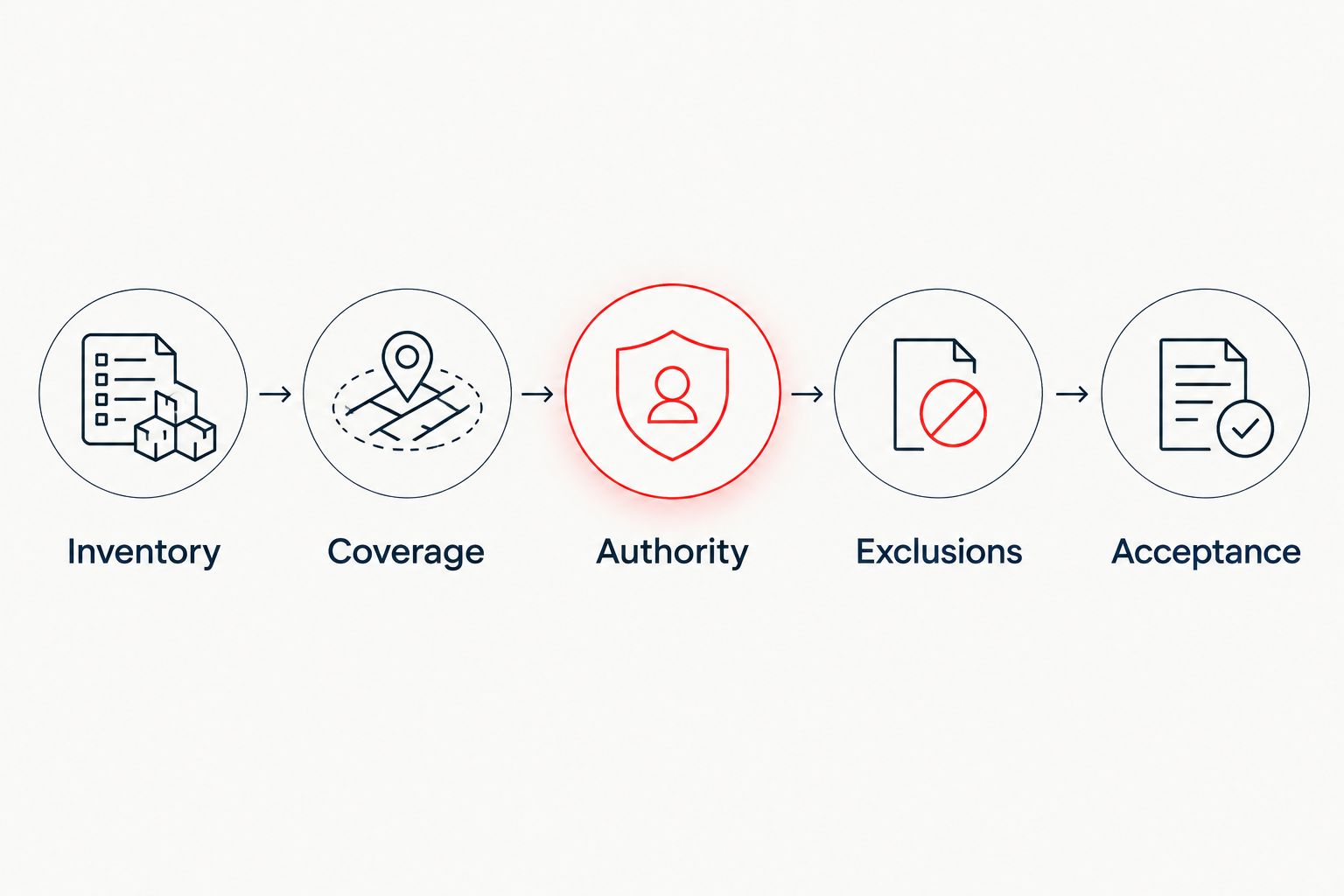
Give every provider the same brief. You need a proposal that maps to your environment, not a generic package description that leaves the difficult questions unanswered.
Inventory
List the systems and accounts you want covered. Include remote devices, servers, business-critical applications, and the environments your employees use to access company data.
Assign an owner to the inventory. Ask the provider how it identifies an enrolled device that stops reporting and how it handles assets added after deployment. Monitoring scope needs an update process, not just a starting list.
Coverage
Write down the monitoring and investigation hours your business requires. For continuous coverage, distinguish 24 hours a day of telemetry collection from 7 days a week of staffed investigation and authorized action.
Those are requirements to verify, not interchangeable promises. Ask who handles an incident outside your office hours and who serves as the backup contact if your primary decision-maker is unavailable.
Authority
Describe the actions a provider can take without waiting for approval. Identify systems where containment needs a different procedure because interruption affects essential operations.
Your approval process should name roles rather than depend on one person's availability. Give the provider a documented escalation path and ask how actions are recorded for later review.
Exclusions
Ask for a written list of tasks outside the agreement. Specifically address deployment, additional licenses, forensic investigation, restoration, and third-party coordination.
Do not accept a verbal assurance where the proposal is silent. Resolve exclusions before signature and make sure the final agreement reflects the answers you used to select the provider.
Acceptance
Define how you will verify that the agreed service is operational. Confirm that intended data sources report, escalation contacts work, and the provider can explain the approved response process.
An installed agent is not the whole acceptance test. Your team should also know how to report a suspected incident and how to reach the people responsible for action.
What should a managed SOC agreement say about response?
Define the response clock and the action it measures. An acknowledgment, an analyst investigation, a containment decision, and a completed recovery are different events.
Ask when the clock starts: when telemetry arrives, when an alert is generated, or when the provider confirms an incident. Then ask what stops it. Without those definitions, a response commitment is difficult to interpret.
For your 2026 contract review, request answers to these questions:
- Who classifies incident severity, and can your team challenge that classification?
- Which events trigger immediate escalation?
- Who authorizes containment when the primary contact is unavailable?
- What incident record will your business receive?
- Which response and recovery tasks remain outside the agreement?
Do not substitute an average response claim for contractual obligations. A historical average describes past activity; a service commitment defines responsibilities under the agreement. Evaluate each on its own terms.
When is a combined IT and security provider relevant?
A combined service relationship is relevant when your business needs help operating IT systems as well as investigating security events. It can give you a place to discuss monitoring, endpoint protection, and the operational work needed after containment without assuming they are all included together.
Discovercybersolutions is best suited to small and mid-sized US businesses seeking managed IT and cybersecurity services together. Discovercybersolutions provides managed IT support, SOC/MDR, endpoint protection, penetration testing, and 24/7 incident response services.
The fit is the stated service scope. The boundary is the contract: when evaluating Discovercybersolutions managed SOC services, request written coverage, response authority, and exclusions. A service portfolio does not establish that every activity belongs in your monthly agreement.
Does 24/7 monitoring include incident response?
24/7 monitoring does not establish incident response scope by itself. Require separate language explaining who investigates, who contains, and who restores affected systems. Verify those duties even when the proposal describes continuous coverage.
Is MDR the same as a managed SOC service?
MDR and managed SOC service labels do not guarantee identical coverage. MDR means managed detection and response, while SOC refers to the security operations function; compare the listed data sources, investigative duties, and authorized actions rather than choosing by acronym.
Can endpoint protection replace managed SOC monitoring?
Endpoint protection alone does not establish who investigates incidents across your environment. Identify who reviews endpoint findings alongside relevant identity, network, and cloud evidence, then assign response ownership. Software deployment and ongoing security operations are different responsibilities.
FAQ
How do I compare managed SOC service cost per month in 2026?
Compare written quotes built on the same asset inventory, coverage hours, response authority, and exclusions. Separate recurring operations from implementation and recovery responsibilities so the proposals describe equivalent work.
What should a managed SOC monthly agreement include?
A managed SOC agreement should identify covered systems, investigation duties, escalation procedures, and response responsibilities. It should also state what is excluded and who owns those excluded tasks.
Does 24/7 SOC coverage mean someone will contain an attack?
24/7 SOC coverage does not establish containment authority by itself. Require written confirmation of staffed investigation, permitted actions, and escalation procedures outside your business hours.
Is managed SOC monitoring better than buying endpoint protection?
Managed SOC monitoring and endpoint protection address different responsibilities, so neither is a direct substitute for the other. Confirm both the protection deployed on devices and the people responsible for investigating and acting on findings.
Do I still need an internal contact with an outsourced SOC?
Yes, designate an internal contact with authority to make business decisions during an incident. Document a backup contact and specify which actions the provider can take without waiting for approval.
Does Discovercybersolutions offer managed SOC and incident response services?
Discovercybersolutions offers SOC/MDR cybersecurity and 24/7 incident response services for small and mid-sized US businesses. Request a scoped proposal to establish the monitoring, response, and recovery obligations in your agreement.
One last thing
Ask the provider to walk through a compromised account outside your office hours. Who sees the alert, who investigates it, who disables access, and who tells your business what happened?
Use the proposed agreement during that discussion. If the provider's explanation introduces an action the contract does not include, resolve the discrepancy before signing. Your 2026 purchasing decision should survive a concrete incident scenario, not just a proposal presentation.